
HTTP/2 & HttpClient 5
One modern HTTP stack with first-class HTTP/2, protocol negotiation, NTLM that works, and Brotli/Zstandard decoding.
The JMeter workflow you already know, with the engine and editor it should have had: HTTP/2 on a modern client, Java 21, 50–80% less memory, real undo/redo, and a results tree that shows what you're actually debugging. AI Repair ships in the free tool, so Claude Code or Codex can fix your plans right on your machine.
Forked from JMeter 5.6.3. Your JMX files and most plugins keep working.
What you get
The familiar test-plan model, minus the parts that made it a chore.
One modern HTTP stack with first-class HTTP/2, protocol negotiation, NTLM that works, and Brotli/Zstandard decoding.
Lazy decompression, response retention modes, and per-thread buffer reuse help big tests fit on smaller machines.
A built-in MCP server lets Claude Code or Codex inspect, repair, validate, and rerun your plans, either as a full pass or from targeted instructions.
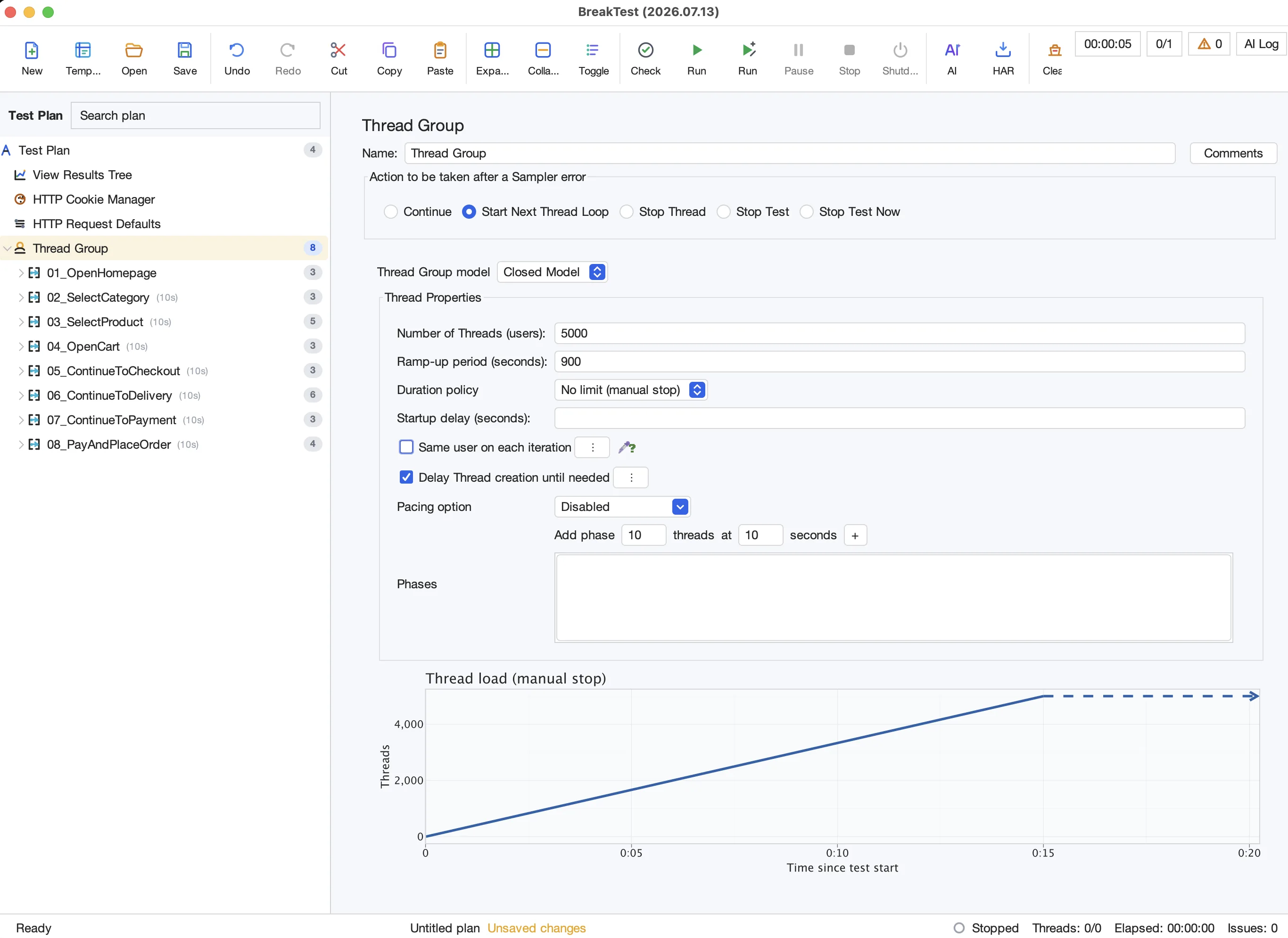
One Thread Group covers classic ramp-and-hold phases and open-model arrivals per second, with a schedule preview graph.
Browser-like concurrent requests and independent work branches without thread-group workarounds.
Pause a running test from the GUI or the command port, see what's happening, and resume without restarting a long run.
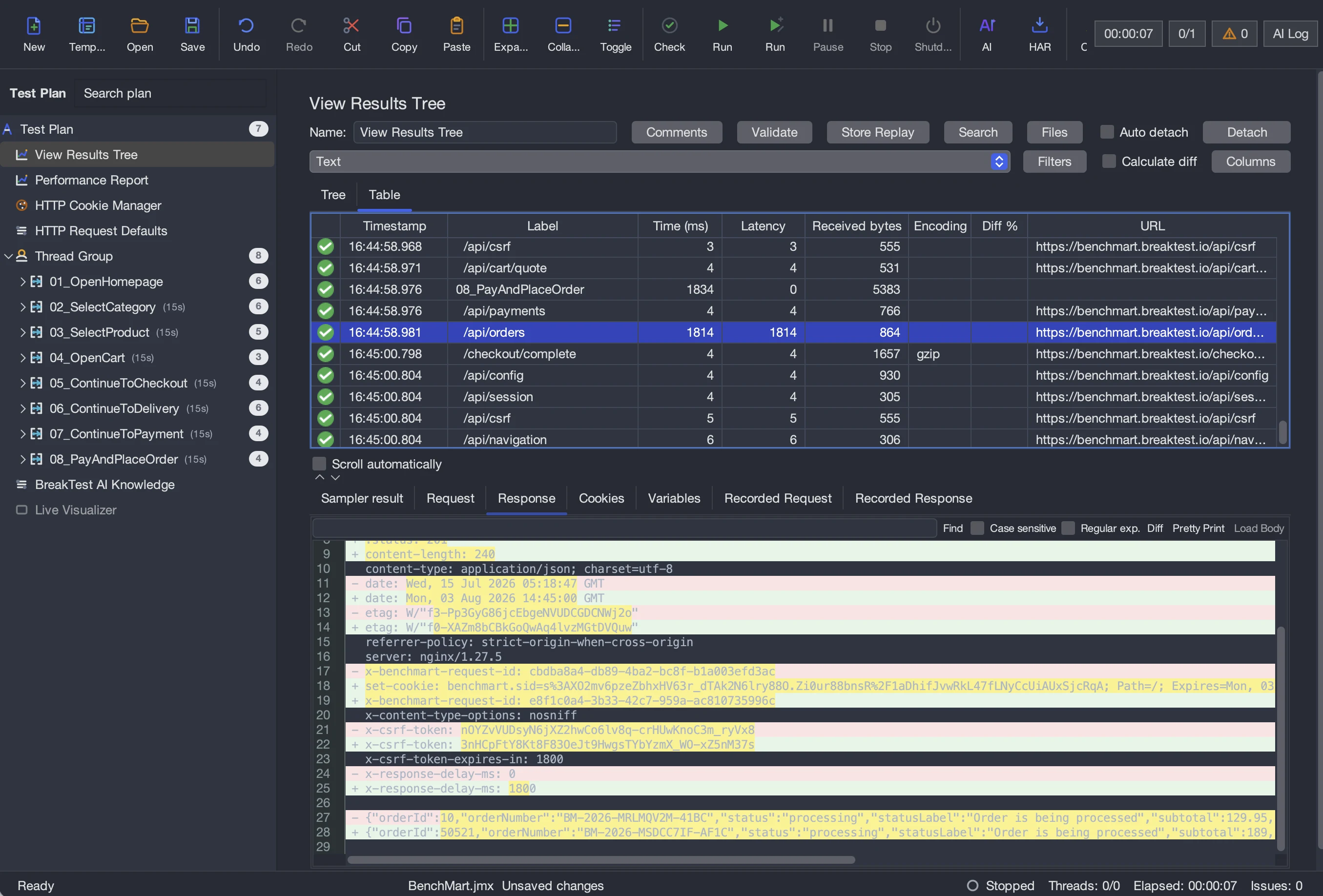
Endpoint, HTTP/TLS metadata, cookies, variables, binary/text detection, and jump-to-source from any sample.
Semantic history for add, delete, move, update, and search-replace. Restructure a 2,000-element plan without holding your breath.
FlatLaf-based styling and compact layouts, plus background loading so large plans open fast.
All extractor types can fail the sampler when nothing matches, so you find broken correlation at the source instead of downstream.
Random CSV record order, a preview of the first variable assignments, and clean per-iteration variables.
Plans with unavailable plugin elements open with disabled placeholders, so you can inspect and migrate instead of being locked out.
See it work
When a script misbehaves, the answer is in the details. The results tree puts them in one place instead of spreading them over logs.
Compatibility
BreakTest JMX variant adds metadata for features JMeter doesn't have (HAR diffs, AI context).BreakTest's full GUI, runtime, and AI Repair are free to use. When you're ready to run at scale, BreakTest Enterprise also offers a free, renewable on-premises license for up to 250 virtual users, with unlimited tests and test hours.